

Power Knowledge: What Is a Module Power Supply
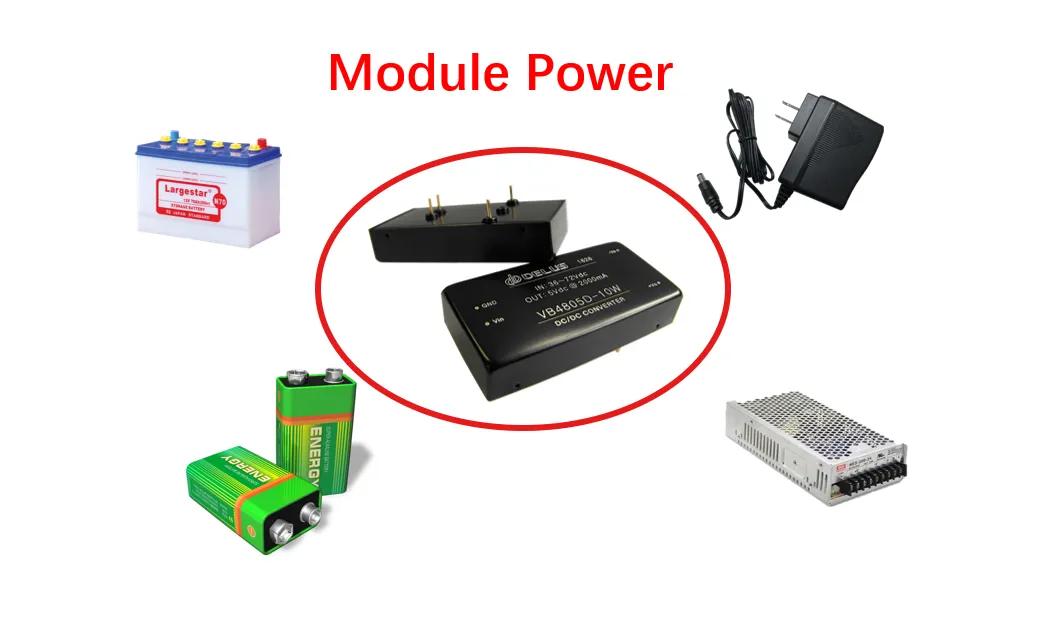
1. Definition of Power Supply
- The concept of power supply covers a wide range. Generally, it refers to equipment or devices that can continuously output electric energy.
- Power supplies are essential components for all electronic equipment, comparable to the human heart. Without power supplies, electronic devices cannot operate normally.
- Power supplies come in various forms. This article focuses on module power supplies.
2. Definition & Application of Module Power Supply
A module power supply is a miniaturized power supply unit developed with advanced technologies, which can be directly surface-mounted on printed circuit boards (PCBs).It is designed to supply power for Application-Specific Integrated Circuits (ASICs), Digital Signal Processors (DSPs), microprocessors, memory chips, Field-Programmable Gate Arrays (FPGAs), and other digital & analog loads. Such modules are also known as Point-of-Load (POL) power supply systems or Point-of-Use Power Supply (PUPS) systems.
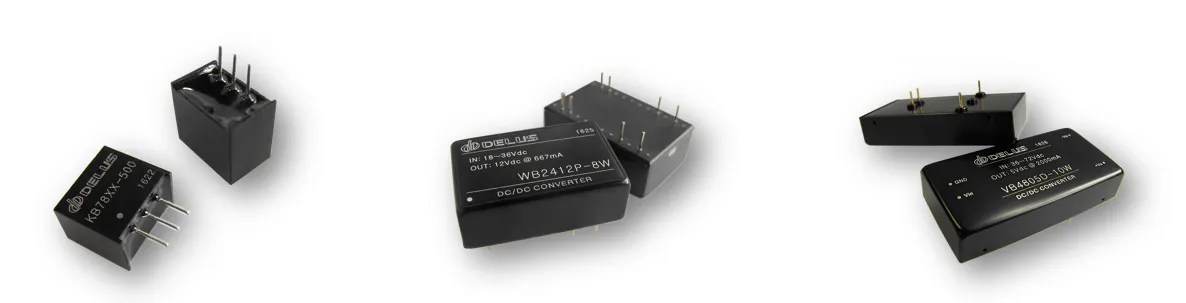
Thanks to multiple advantages of modular design, module power supplies are widely adopted in communication industries including switching equipment, access network devices, mobile communication, microwave communication, optical transmission equipment and routers. They are also extensively used in automotive electronics, aerospace and other fields.
In recent years, driven by the rapid expansion of data services and the popularization of distributed power supply systems, the market growth rate of module power supplies has exceeded that of primary power supplies. Benefiting from advances in semiconductor manufacturing, packaging technologies and the wide application of high-frequency soft-switching topologies, module power supplies feature higher power density, improved conversion efficiency and simpler system integration.